Choosing between impact windows and hurricane shutters is a big decision for any Juno Beach homeowner. Your choice affects safety during storms, day-to-day comfort, insurance costs, HOA approvals, and even resale value. This guide breaks down how each option works, what it costs over time, and how to align your choice with your lifestyle and property type.
Why your storm solution choice matters
Storm protection is required for many coastal properties under the Florida Building Code. You can meet that requirement with impact-resistant windows or with code-approved shutters, as long as the products meet the appropriate test standards and are properly installed and documented according to the Florida Building Code. In Juno Beach, the town enforces permitting and inspections for either route, so product approvals and installation details matter at inspection time per the Town of Juno Beach Building Department.
This guide helps you compare protection, convenience, upkeep, cost, insurance credits, and HOA considerations so you can choose the solution that fits how you live and what you value most.
How each option works
What impact windows are
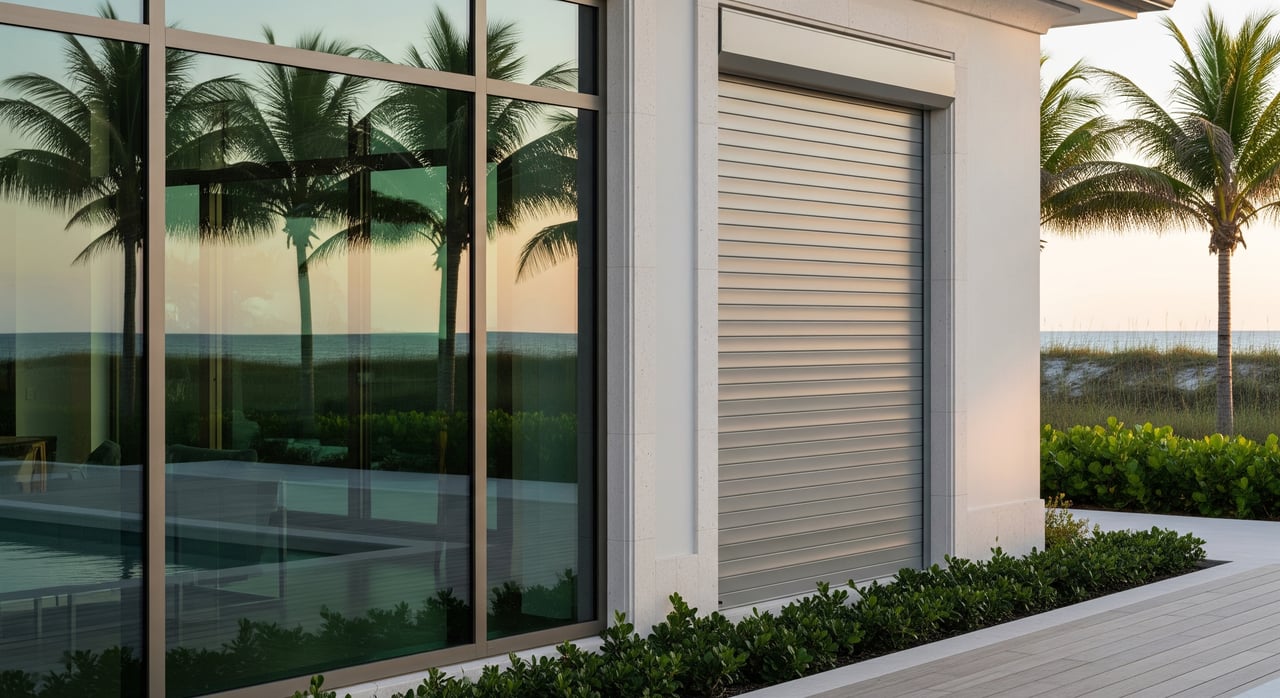
Impact windows use laminated glass that is engineered to resist flying debris and pressure changes during a hurricane. If struck, the glass is designed to crack but stay bonded, helping keep the opening intact and limiting interior pressurization and water intrusion per Florida disaster guidance on debris standards. They protect your home 24/7 without any action from you. Many models also cut UV, reduce noise, and improve energy efficiency compared with older single-pane windows per ENERGY STAR guidance.
What hurricane shutters are
Hurricane shutters are protective coverings that you close before a storm. Options include removable panels, accordion shutters, roll-downs, Bahama, and colonial styles. When properly installed and closed, approved shutters can meet the same debris and pressure standards as impact windows. The key is deploying them correctly and on time. Manual systems require you or a caretaker to install or close them, while motorized roll-downs add convenience at a higher cost see common shutter types and considerations.
Key differences that matter most
Storm protection and safety
- Impact windows: Passive protection that is always in place. They reduce the risk of forgetting or delaying storm prep and help maintain the building envelope after impact per debris-impact standards.
- Shutters: Strong protection when closed and maintained. The main risk is human error or mechanical failure, especially with removable panels or older hardware that has not been serviced.
Convenience and everyday living
- Impact windows: No deployment, no storage, and no last-minute scramble. Helpful if you travel often or live seasonally.
- Shutters: Require time and effort to close before every storm. Motorized roll-downs are easier but need power and periodic service.
Maintenance and long-term durability
- Impact windows: Fewer moving parts and typically long service life with routine cleaning and seal checks. Many last 20 to 30 years or more depending on brand and care industry estimates.
- Shutters: Tracks, hinges, motors, and fasteners face salt air and can corrode. Expect regular lubrication and inspections, with many systems needing repair or replacement within 10 to 20 years depending on materials and exposure industry guidance on lifespan. Selecting marine-grade hardware helps in coastal environments coastal material considerations.
Energy, noise, and UV performance
- Impact windows: Provide year-round benefits like lower heat gain, better insulation, UV blocking, and quieter interiors when properly specified per ENERGY STAR and DOE guidance.
- Shutters: Reduce light and heat only when closed. During normal days, they offer little energy or noise benefit.
Curb appeal and natural light
- Impact windows: Maintain your home’s architecture and allow full natural light.
- Shutters: Can add coastal charm when chosen thoughtfully. However, some styles change the facade and may limit daylight when closed.
Cost, insurance, and ROI
Upfront versus lifetime costs
- Impact windows: Higher upfront investment, especially for large or custom openings. Costs vary by product approvals, frame materials, and exposure ratings see Florida cost ranges context. The tradeoff is low deployment effort and long service life.
- Shutters: Lower upfront costs for basic systems, with higher prices for automated roll-downs. Expect ongoing maintenance and potential hardware replacement over time cost overview by type.
Insurance credits and savings
Florida insurers offer wind-mitigation discounts for qualified opening protection. To receive the “opening protection” credit, all exterior glazed openings generally must be protected with verified impact-rated products or approved shutters. A wind-mitigation inspection documents the credit, and carriers’ discounts vary overview of mitigation credits and inspections. Installers or inspectors can help you schedule the OIR-B1-1802 inspection so your policy reflects your upgrades inspection practice in Florida.
The State’s My Safe Florida Home program has offered free wind-mitigation inspections and, when funded, matching grants for eligible upgrades like impact windows and doors. Application windows and funding levels change, so check timing and rules before planning your project state program update and the grant portal.
Resale value and buyer demand
In coastal markets like Juno Beach, buyers often view permanent impact windows as a premium upgrade that simplifies life and signals a well-cared-for property. Shutters can still be a strong selling point when systems are modern, uniform, and well documented. Keep permits, product approvals, and inspection records organized to boost buyer confidence at sale time.
Condo and HOA considerations
Rules, approvals, and uniformity
Many Juno Beach associations require architectural review for visible exterior changes, including shutters and window replacements. The Town may also require Architectural Review Board sign-off for larger renovations. Submit applications early and match styles that comply with community standards town permitting overview and permits page.
Common elements and responsibility
In condos, windows and shutters can be common elements or limited common elements. Your declaration will define who pays for upgrades or replacements and who maintains them. Confirm ownership boundaries before you request bids.
Coordination and access for installs
Associations often require contractor licenses, insurance certificates, and proof of product approvals for scheduling. Expect work-hour rules, elevator pads, and staging plans. Clear communication with your manager helps avoid delays.
Installation and maintenance basics
Vetting contractors and warranties
- Verify licenses, references, and insurance.
- Request product approvals and labels, such as Miami-Dade NOAs or ASTM/TAS certifications for your chosen system product approval background and NOA reference point.
- Ask for written warranties, coastal corrosion language, and service plans.
Permits, inspections, and timelines
- Juno Beach enforces the Florida Building Code locally. Window and shutter installations typically require permits and inspections town building department.
- If your parcel lies in a wind-borne debris region, code-compliant opening protection is required. Palm Beach County mapping tools indicate design wind speeds by area county mapping reference. Keep approvals and labels for inspection.
Annual care and storm prep
- Impact windows: Clean frames and glass, check seals, and confirm labels remain accessible.
- Shutters: Rinse and lubricate tracks and fasteners, test motors, tighten hardware, and replace rusted parts. Do a pre-season closure test so you are not surprised before a warning is issued.
Match the choice to your lifestyle
Full-time vs. seasonal residents
- Seasonal or frequent travelers: Impact windows reduce worry and last-minute trips to close shutters. They also help with everyday comfort when you are away or arriving late.
- Full-time residents with help on hand: Well-maintained shutters can be a cost-effective solution, especially if your home is easy to access and you are comfortable with pre-storm prep.
Investors and rental properties
- Impact windows simplify turnover and reduce the chance that guests or tenants fail to deploy protection. They also reduce noise and improve comfort ratings.
- If using shutters, choose systems that are easy for a property manager to operate and document clear instructions for tenants.
Budget, design, and future plans
- If you plan to remodel or re-skin exteriors, impact windows can anchor a long-term plan with cleaner lines and improved efficiency.
- If you expect to sell soon and need fast compliance, code-approved shutters can deliver protection with lower upfront cost. Keep documentation to support insurance credits and buyer peace of mind.
What buyers and sellers should know
Pre-sale upgrades that move the needle
Homes with documented, code-approved opening protection often market faster and appraise more smoothly. Impact windows stand out in listing photos and showings. Modern, uniform shutters still add value when systems are clean and operable.
Inspection, disclosures, and documentation
Keep permits, NOAs or product approvals, and any wind-mitigation inspection reports. These help underwriters, appraisers, and buyers evaluate risk and insurance costs.
Marketing the upgrade story
Show the benefits beyond storms: quiet interiors, energy efficiency, security, and modern aesthetics. Highlight lifetime value, recent service records, and any transferable warranties.
Plan your next steps with confidence
- Confirm your property’s exposure and code requirements using Palm Beach County and Town tools wind speed mapping and Know Your Zone resources.
- Compare bids with product approvals and warranties side by side.
- Ask your insurer how to capture wind-mitigation credits and plan the inspection after install mitigation credit overview.
If you want a property-specific plan that balances protection, budget, and resale, let’s talk. For tailored guidance, vendor introductions, and a complimentary market snapshot for your neighborhood, connect with Joel Poulin. I will help you choose the path that fits your home and goals.
FAQs
Do I need impact windows in Juno Beach or will shutters meet code?
- Either can meet code if they carry the right approvals and are installed properly. The Florida Building Code recognizes impact-resistant glazing or approved shutters for opening protection in wind-borne debris regions FBC overview.
What product approvals should I look for?
- Outside the Miami-Dade HVHZ, products typically use ASTM E1886/E1996 approvals. Miami-Dade NOA products use TAS standards and are widely accepted for stringent exposures. Keep labels and approval sheets for permitting and insurance approval background.
Are impact windows better for energy savings than shutters?
- Yes. Impact windows can improve efficiency, block UV, and reduce noise year-round. Shutters help only when closed ENERGY STAR guidance.
Can I get insurance discounts for either option?
- Yes, if all openings are protected with approved products and you document this via a wind-mitigation inspection. Credits vary by carrier mitigation overview.
Are there grants to help pay for upgrades?
- The My Safe Florida Home program offers free inspections and, when funding is available, matching grants for eligible homeowners. Check current application windows and rules program update and the grant portal.
Do I need a permit in Juno Beach for windows or shutters?
- Yes. The Town requires permits and inspections for these installations. Your HOA may also require approval before work begins town building department and permits page.
How does salt air affect my choice?
- Salt exposure can corrode shutter tracks and hardware, especially on motorized systems. Choose marine-grade materials and plan regular service. Impact windows need less mechanical maintenance but still require periodic checks coastal considerations.
How do I know my home’s wind exposure requirements?
- Use Palm Beach County wind speed maps and consult your contractor and the Town for parcel-specific guidance during permitting county mapping reference.