You love your Juno Beach escape, but you live hundreds or thousands of miles away. Caring for a second home from out of state can feel stressful, especially with Florida’s weather and coastal wear. The good news is you can protect your place with a simple plan that fits how often you visit. In this guide, you’ll get a clear, step-by-step approach to maintenance, hurricane prep, trusted vendors, and remote tools tailored to Juno Beach and Palm Beach County. Let’s dive in.
Know Juno Beach’s risk profile
Juno Beach sits on the coast of Palm Beach County, so your plan should reflect local conditions and rules.
- Save the Town of Juno Beach website for permitting, utilities, and local contacts. It is your first stop for forms and updates. Visit the Town of Juno Beach site.
- Hurricane season runs from June 1 to November 30. Plan your pre-season checks in May so your home is ready before the first storm threat. See the National Hurricane Center’s season timing.
- Confirm your evacuation zone using Palm Beach County’s online tool and register for county alerts. Start with the county’s Know Your Zone guide.
- Flood mapping has been updated in parts of Palm Beach County. Before insurance or improvement decisions, run your address in the county’s FEMA flood map viewer. Coastal properties also face salt-air corrosion, so plan extra exterior care.
Get association and insurance basics right
If your property sits in a condo or HOA, start with the rules that govern it.
- Condos follow Chapter 718 of Florida statutes. Provide your best mailing address and a reliable local emergency contact, and request the official records and emergency procedures. Review the Chapter 718 condo statute overview.
- HOAs can adopt rules on rentals and improvements. Before listing your place or starting a project, confirm the process, required approvals, and any local-agent requirement. See the HOA rulemaking section in Chapter 720.306.
- Standard homeowners and unit-owner policies usually do not include flood coverage. Flood insurance is separate, and pricing under FEMA’s Risk Rating 2.0 depends on property-specific factors. Review Palm Beach County’s flood zone and insurance update and get both NFIP and private quotes.
Pro tip: Ask your association for its master-policy summary so you know what the building covers and what you must insure inside your unit. Confirm any deductible responsibilities, too.
Build a simple maintenance plan
The right schedule depends on whether your home is a single-family property or a condo, and how often it is occupied. Here is a practical baseline for Juno Beach:
- Visual walkthroughs: Do monthly checks for vacant or seasonal homes, and weekly checks if the property is rented or has a pool and active landscaping. A manager can log water meter readings, leaks, HVAC status, and security. Many managers outline visit frequency and reporting in their plans. See typical service components in property management fee guides.
- Pool care: Weekly professional service is common in South Florida to keep chemistry stable, prevent algae, and protect equipment.
- HVAC: Service your system at least once a year. For heat pumps that cool and heat, a spring and fall service helps avoid season-start failures and protect warranties. Replace or check filters monthly to quarterly depending on conditions.
- Roof, gutters, and exterior: Clean gutters and downspouts twice a year and after major storms. Salt air speeds up corrosion, so check metal fasteners, railings, screens, and exterior paint more often. Confirm whether any exterior work needs permits with the Town of Juno Beach.
- Plumbing and water risk: Add leak sensors under sinks, at the water heater, and in HVAC pans. Consider an automatic shutoff if a leak could cause major damage. During checks, run water briefly and inspect for drips.
- Pests and termites: Keep vegetation trimmed away, control moisture, and schedule regular pest inspections. Many South Florida owners use quarterly or semiannual service. Ask for written reports.
Vet local pros you can trust
When you hire vendors or a property manager, use a consistent screening process.
- Licensing: Verify state licenses through the Florida DBPR portal. Ask for license numbers and confirm status. Start at the DBPR license lookup.
- Insurance: Request proof of general liability and workers’ comp. For structural or electrical work, confirm coverage and permitting needs in writing.
- References and track record: Ask for recent Palm Beach County jobs and talk to those clients. Local agents and nearby owners are often great referral sources.
- Clear scope and response terms: Get a written scope, timeline, pricing, warranty, and emergency call-out policy.
- Property managers: Review fee ranges, services included, reporting cadence, after-hours coverage, and termination terms. Many managers publish common fees in market guides like this Florida overview.
Plan around the seasons
Timing matters in coastal Florida. A little planning reduces cost and stress.
- Schedule larger interior or exterior projects for drier, off-peak months when vendors are less busy. Confirm permits with the Town of Juno Beach and coordinate association approvals before you book work.
- Hurricane pre-season checklist for May: secure or store outdoor furniture, verify shutters or impact glass, service any generator, confirm insurance coverage and deductibles, catalog valuables, and share a written disaster plan with your association and local contact. Check season dates at the National Hurricane Center.
- After a storm: arrange a documented inspection for the roof, windows, doors, water intrusion, and electrical hazards. Keep dated photos and notes for insurance.
Remote-owner tools and workflows
Smart, simple systems help you keep tabs on your home without flying in.
- Mail and packages: Use USPS Hold Mail for short trips and sign up for USPS Informed Delivery to preview mail and packages. For longer absences, name a local responsible party or consider a manager.
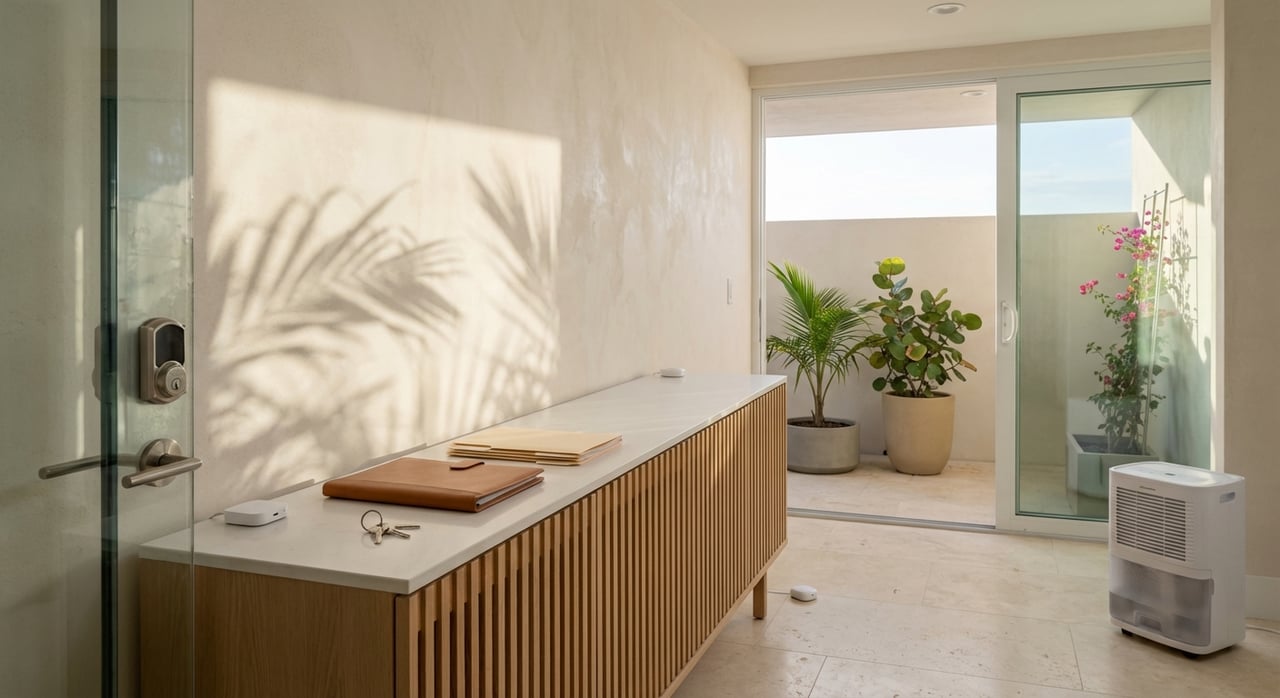
- Smart tech: Add a smart thermostat, security cameras or alarm with app access, smart locks with vendor codes, water-leak sensors, and timed lighting. Many managers include photo logs after visits so you can review work and conditions.
- Documents and contacts: Store digital copies of your deed, insurance policies, association contacts, contractor licenses, and appliance manuals in a secure cloud folder. Share access with your manager and a trusted contact.
A ready-to-use schedule
Use this template and adjust by property type, occupancy, and association rules.
- Weekly when occupied or rented: pool service, quick exterior check, trash and bins, brief photo report after storms.
- Monthly when vacant: exterior walk of roofline and windows, interior water and leak check, HVAC runtime test, meter reading, pest signs, photo report.
- Quarterly: pest service if contracted, deeper pool equipment check, HVAC filter change, review insurance and association bills, confirm emergency contacts.
- Twice yearly: full HVAC service in spring and fall, finalize hurricane supplies in late spring, and line up off-peak projects in late fall.
- After a named storm: documented inspection, contact insurer and association, take and store photos, and schedule mitigation quickly.
Quick start checklist
- Pull your condo or HOA governing docs and confirm mailing address and local emergency contact on file. Review the condo statute overview in Chapter 718 and HOA rental and improvement rules in Chapter 720.306.
- Check your address in the county’s FEMA flood map viewer and review Palm Beach County’s flood zone and insurance update. Get NFIP and private flood quotes.
- Confirm permits and any short-term rental rules with the Town of Juno Beach.
- Verify licenses for vendors and managers through the DBPR portal. Request insurance certificates and written scopes.
- Enroll in USPS Hold Mail for short absences and set up USPS Informed Delivery. For longer gaps, appoint a local contact or manager.
- If you have a pool, arrange weekly service. Book HVAC service for spring and fall, then set recurring filter reminders.
Partner with a local advocate
You do not have to manage this alone. A trusted local advisor can help you confirm association rules, line up vetted vendors, time projects around the seasons, and keep your second home show-ready for your next visit. If you are exploring a purchase, a sale, or want a sanity check on your plan, reach out to Joel Poulin for tailored guidance across Juno Beach and Palm Beach County.
FAQs
What months are hurricane season in Juno Beach?
- The Atlantic hurricane season runs June 1 to November 30. Aim to complete pre-season checks in May. See timing at the National Hurricane Center.
How often should you service a pool at a second home in Palm Beach County?
- Weekly professional service is common to maintain water chemistry, prevent algae, and protect equipment, especially when the home is unoccupied.
Do condo or homeowners policies include flood insurance in Florida?
- Flood is a separate policy. Pricing under FEMA’s Risk Rating 2.0 varies by property. Review county guidance and get both NFIP and private quotes using Palm Beach County’s flood zone update page.
How do you check if a property manager or contractor is licensed in Florida?
- Ask for the license number and verify it on the state’s DBPR license lookup. Confirm insurance and get references in writing.
How can you find your Juno Beach evacuation zone?
- Use Palm Beach County’s Know Your Zone tool and register for county alerts to stay informed during storms.
What monthly inspections help protect a vacant condo?
- Check for leaks at sinks and the water heater, confirm HVAC runtime and clear drip pans, inspect windows and doors, look for visible mold or pests, and request a photo report after each visit. Many managers outline these checks in their service plans.