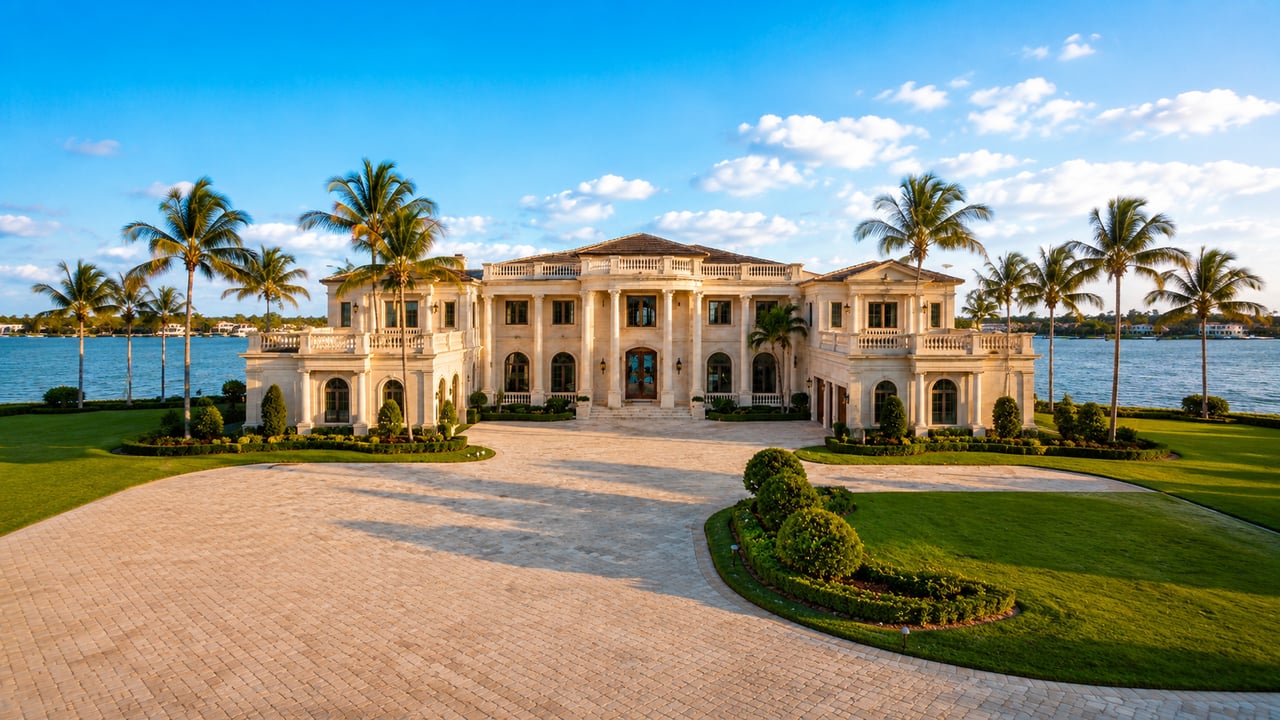
5 Types of Homes You Should Never Buy — Even When They Look Perfect
Watch the full video breakdown on YouTube.
At a Glance: The five types of homes most likely to cost you more than they're worth are (1) homes priced above the neighborhood ceiling, (2) homes in high-risk flood zones, (3) homes with significant unpermitted work, (4) recent flips by inexperienced operators, and (5) homes with over-the-top custom features. None of these are absolute rules — but each one carries a hidden cost that never shows up in the listing price.
Some homes look perfect on the listing, perfect on the showing, and perfect on the inspection — and a good agent will still tell you to walk away. Not because they're bad homes, but because of what they cost you the day after you close. If you're buying in Palm Beach County, or anywhere in Florida, these are the five categories worth knowing before you write an offer.
1. Homes Priced Above the Neighborhood Ceiling
This is the trap that catches the most elevated buyers, because on paper the home looks worth the price. Maybe the seller spent heavily on the renovation. Maybe the finishes are better than anything within a five-block radius. Maybe it's genuinely the nicest house on the street. That's exactly the problem.
Every neighborhood has a price ceiling — not a published number, but the highest price a comparable home has actually sold for in roughly the last six months. Buy above it and two things work against you. First, the appraisal: appraisers value your home against comparable sales, typically three to five homes that have closed within about a mile in the last ninety days. Contract above the highest of those comps and the appraisal comes in low, leaving you to cover the gap in cash, renegotiate with a seller attached to a number that doesn't exist, or walk away. Second, resale: once you close above the ceiling, you become the new ceiling, and the same dynamic works against you in reverse when you sell.
How to test it before you offer: ask your agent to pull every closed sale within a half mile over the last six months and look at the top three. If the home is asking 5–10% above the highest, you're in the warning zone. Fifteen percent above is the walkaway zone — no matter how beautiful the renovation. The market doesn't care what the seller spent; it cares what comparable buyers have actually paid.
2. Homes in High-Risk Flood Zones
Here's the reality: a 100-year flood zone doesn't mean a flood every hundred years. It means a 1% chance of a major flood every single year — which, over a 30-year mortgage, works out to roughly a one-in-four cumulative probability. That's a planning event, not a freak event. A 500-year zone is lower risk, but not zero, and the climate baseline those maps were drawn against is shifting.
The cost matters too. Nationally, average annual NFIP flood insurance runs roughly $900–$1,100, but that average hides an enormous range. High-risk and coastal policies run well above the national average, and for a higher-value coastal home a private flood policy can run anywhere from roughly $2,800 to $5,000 or more a year. Two things most buyers miss: NFIP caps residential building coverage at $250,000, so on a million-dollar home you'll need a private excess policy on top — and those carriers can decline you, raise rates, or exit a market entirely. And if you're financing with a conventional mortgage in a Special Flood Hazard Area, your lender requires flood insurance; it gets escrowed into your monthly payment and follows the home forever. If you buy in a high-risk zone anyway, just be sure the full cost of ownership is in your math before you commit.
3. Homes With Significant Unpermitted Work
Buyers consistently underestimate this one, especially at higher price points where the work usually looks great — a finished basement, a primary-suite addition, a pool house, a garage conversion. Beautiful cosmetics, and not a single permit pulled. The problem isn't aesthetic; it's structural to the entire transaction.
Appraisers don't count unpermitted square footage, so the five-bedroom you're paying for gets appraised as the four-bedroom it legally is, and your financing gets compromised. Standard title insurance doesn't cover unpermitted construction, so if the municipality catches it — and they usually do, when you go to sell — you're personally on the hook for permits, retroactive inspections, code upgrades, and sometimes demolition. Your homeowners insurer can deny a claim if a fire traces to unpermitted electrical or water damage to unpermitted plumbing. And many lenders simply won't finance a home with major unpermitted additions, or will require the work be permitted before closing.
What to do: pull the property's permit history during your inspection period — in most jurisdictions you can do this online through the county or city — and compare what's permitted to what's actually there. Small, cosmetic work is usually negotiable. Structural work — an addition, a load-bearing change, a converted garage — that the seller won't retroactively permit is a strong reason to walk.
4. Recent Flips by Inexperienced Operators
There are excellent flippers who take homes down to the studs and bring them back better than new. This isn't about them. It's about the version that's everywhere right now: an LLC that bought twelve months ago, did a fast cosmetic refresh, and relisted for substantially more. Flipped homes accounted for 7.4% of all U.S. home sales in 2025 — most were fine, some were not.
You can tell the difference in the first ten minutes of a showing by looking at the small stuff, not the headline finishes. Are the trim corners cut clean, or filled with caulk? Is the paint cut sharp to the ceiling, or wavy? Do the cabinet doors sit flush? Open a drawer — does it slide smoothly? If they cut corners on what you can see, ask what they did to the wiring, the plumbing, the window flashing you can't. Then check the listing history: any public real estate site shows the last sale date and price. If an LLC paid $500,000 eight months ago and is listing at $825,000 with only paint, flooring, and counters to show for it, someone is paying for that delta — don't let it be you. Even if the standard inspection comes back clean, on a recent flip it's worth going deeper: a sewer scope, a thermal scan, and the permit history.
5. Homes With Over-the-Top Custom Features
At a certain point, custom stops adding value and starts subtracting it. The test: walk the home and ask whether the next buyer would want this exact feature. If the answer is no, it's good to be aware that the feature isn't going to be a value add in terms of future resale value.
The classics are a custom theater room with locked-in seating, a built-in saltwater aquarium, an over-designed wine cellar, a yard so heavily landscaped it reads like a jungle, or an indoor pool with a glass-enclosed lounge. None are wrong — they're just deeply personal, and the personality tax on resale is real. Say a seller spent $400,000 on the feature and expects it back; the next buyer doesn't want it at any price, so the seller either discounts enough for the buyer to rip it out, or the home sits and days-on-market climbs. The same applies to the over-renovated kitchen: spend $300,000 on custom cabinets, exotic stone, and hand-forged hardware, and you've built something that appeals to almost no one, because the more specific the design, the smaller the buyer pool.
So separate two questions when you walk a home: what you'd enjoy living with, and what you'd want to inherit if it were already there. The features that hold value across a broad buyer pool are consistent — a flexible kitchen layout, a primary suite that feels like a retreat, indoor-outdoor living, storage, light, ceiling height. The features that destroy value are equally consistent — anything that locks the next buyer into the previous owner's hobby, requires specialized maintenance, or would be expensive to remove. The single best filter: does this feature expand who would want this house, or shrink it?
The Bottom Line
None of these five are absolute disqualifiers. There are exceptions to all of them, and a great agent and a great inspector can help you navigate every one. But each carries a hidden cost that doesn't appear in the listing price — and the buyers who get hurt are almost always the ones who fell in love before they did the math. Buy the home that gives back, and walk away from the home that takes.
Frequently Asked Questions
What types of homes should you never buy? The five highest-risk categories are homes priced above the neighborhood ceiling, homes in high-risk flood zones, homes with significant unpermitted work, recent flips by inexperienced operators, and homes with over-the-top custom features. Each carries a hidden cost that doesn't appear in the purchase price.
What is a neighborhood price ceiling? It's the highest price a comparable home has actually sold for in the area in roughly the last six months. Buying above it risks a low appraisal and makes you the new high comp working against you when you resell.
Is it a bad idea to buy a home in a Florida flood zone? Not automatically, but you need to understand the real cost. A 100-year flood zone carries a 1% annual flood chance — about a one-in-four cumulative probability over a 30-year mortgage — and flood insurance in high-risk coastal areas can run several thousand dollars a year. If you buy in one, build the full cost of ownership into your math first.
How much does flood insurance cost? Nationally, NFIP policies average roughly $900–$1,100 a year, but high-risk and coastal properties cost more, and a private flood policy on a higher-value coastal home can run from about $2,800 to $5,000 or more. NFIP caps residential building coverage at $250,000, so higher-value homes typically need a private excess policy on top.
Is flood insurance required in Florida? If you finance with a conventional mortgage and the home sits in a Special Flood Hazard Area, your lender will require it. The premium is escrowed into your monthly payment and stays with the home.
What are the risks of buying a home with unpermitted work? Appraisers exclude unpermitted square footage, title insurance won't cover it, homeowners insurance can deny related claims, and many lenders won't finance the home. If the municipality discovers it later, you can be personally liable for permits, inspections, code upgrades, or demolition.
How can you tell if a flipped house was done poorly? Check the small details at the showing — trim corners filled with caulk, wavy paint lines, cabinet doors that don't sit flush, drawers that don't slide smoothly. Then review the listing history for a quick buy-and-relist with only cosmetic updates. On any recent flip, consider a sewer scope, a thermal scan, and a permit-history check.
Do custom home features hurt resale value? Highly personalized features — locked-in theater seating, indoor pools, built-in aquariums, hyper-specific custom kitchens — usually shrink the buyer pool and reduce resale value, because the next buyer rarely wants that exact feature. Flexible, broadly appealing spaces hold value far better.
Thinking about buying in Palm Beach County? If you want an honest read on a specific property before you write an offer, let's talk. Call or text Joel Poulin at 561-818-2441.
📺 More on our Youtube Channel for the latest updates:
Download: Red Flag Homebuyer Checklist