Watch the full video breakdown on Youtube.
Quick answer: Buyers are rejecting homes right now for reasons that are almost entirely about price, presentation, and surprises, not about a bad house. Right now roughly one in six signed contracts is getting canceled, the highest rate since tracking began in 2017. The biggest single deal-killer is the home inspection, cited in about 70% of collapsed deals, and underneath almost every rejection sits the same root cause: the home feels overpriced for the value. The good news for sellers is that nearly all of these reasons are inside your control.
If you're trying to sell and the offers aren't coming, or worse, they are coming and then falling apart, you aren't imagining it. More homebuyers are backing out of deals than at almost any point in the last decade. In December, roughly one in six signed contracts got canceled, the highest rate since it started being tracked back in 2017.
Why are buyers backing out of home purchases in 2026?
Buyers have leverage again. Inventory has climbed, homes are taking longer to sell, and nearly three-quarters of Americans think it is a bad time to buy. When a buyer already feels nervous, every bump in the process, a scary headline, a tick up in their rate, a surprise on the inspection, becomes a reason to bail. So the cancellations you're hearing about are less about individual houses and more about nervous buyers who finally have somewhere else to go.
10. Buyers reject your home before they ever see it
Most homes today get rejected before a buyer ever walks through the door. Buyers screen hard online now: the photos, the price history, and the map. My buyers will sometimes drive by a house before they even ask me to show it, checking whether it backs up to a highway, sits under power lines, or faces a busy road. If it doesn't pass that thirty-second test, the showing never happens.
The biggest culprit is the photos. If they're dark, cluttered, shot on a phone, or taken with a wide-angle lens that makes a room look unrealistic, you lose either way. Bad photos get scrolled past. Deceiving photos get you a showing but a fast no the second reality doesn't match.
What to do: Get professional photography that's accurate, not flattering to the point of being dishonest, and be realistic about the location you have. You cannot win a buyer you never get in the door.
9. The listing oversold it, and now they don't trust you
When the listing promises more than the house delivers, you don't just disappoint a buyer, you make them doubt everything else you said. The classic one here in Florida is "your own private backyard oasis." The buyer gets excited, pulls up, and it's a slab of patio, no fence, and the neighbor's window three feet away. Now they're wondering what else was a stretch: the "updated" kitchen, the "quiet street," the square footage.
What to do: Describe the home like it honestly is and let the house beat expectations instead of falling short of them. The buyer who is pleasantly surprised writes the offer. The buyer who feels tricked just leaves.
8. It has been sitting, and buyers can smell it
Buyers can smell a stale listing. Homes are taking longer to sell. Here in Florida we're averaging around eighty-four days, up from about sixty-eight a year ago. Price cuts are everywhere. Nationally, close to one in five listings has taken a reduction, and about one in ten has been cut three or more times. The first question I get on a home that has lingered is "what is wrong with it?"
Nine times out of ten, nothing is wrong with the house. The price was just too high on day one, so it sat, and now the days-on-market number itself has become the problem.
What to do: Price it right the first week. That opening burst of attention is the most valuable you will ever get, and you only get it once. Chasing the market down with cut after cut only teaches buyers to wait for the next reduction.
7. Buyers have options again, and they won't settle
For three or four years, buyers had no leverage. They waived inspections, overpaid, and took whatever they could get. That is over. Inventory has climbed, and about 13% of collapsed deals now happen simply because the buyer found something they liked better. They come in with a hard must-have list: an open floor plan, a real home office, some privacy. If your home doesn't check the boxes, they move on, because now there is a next one.
What to do: You cannot rebuild the floor plan for a showing, but you can make your listing speak to the buyers your home actually fits, and price it so it is clearly the smarter choice on their short list.
6. The contingency trap: the deal dies over the buyer's house, not yours
About one in five canceled deals falls apart because the buyer could not sell their own home in time. You accept the offer, you feel great, you stop showing the house, and weeks later the whole thing unravels because their buyer walked or their sale never closed. Now you've lost time, momentum, and all the other buyers who moved on while you were tied up.
What to do: This is about the offer you say yes to, not just the house. If an offer hinges on the buyer selling their current home, find out where that sale stands before you take your home off the market. A slightly lower offer with clean, ready financing is often worth far more than a higher one built on contingencies.
5. Cold feet after the contract is signed
This is the record stat from the top: roughly one in six deals canceled, the most in nearly a decade, and a big piece of it is nerves. Nearly three-quarters of Americans say they think it's a bad time to buy a house. When a buyer already feels that way, every little bump becomes a reason to bail.
What to do: You can't fix the economy, but you can remove the excuses. A home that's priced fairly, shows honestly, and inspects clean gives a nervous buyer no off-ramp. The deals that survive cold feet are the ones where the buyer never felt like they overpaid in the first place.
4. It's the payment, not the price
Buyers don't qualify on the sticker price. They qualify on the monthly payment, and that payment is carrying more weight than it used to. Higher rates, plus taxes, plus insurance, and a house they can technically afford feels impossible on the first of every month. Almost 15% of collapsed deals trace back to a change in the buyer's finances late in the game.
In Florida, taxes are their own trap. A longtime owner might be paying tax on an assessment that is years out of date, but the moment a new buyer closes, the county can reassess at full market value, and the bill jumps well past what the seller pays now.
What to do: Keep in mind the real, stabilized payment a new buyer will face, taxes and insurance included. They're not shopping your price, they are shopping their payment.
3. The insurance number
Homeowners insurance used to be an afterthought. Now it's one of the first things a buyer checks. Premiums are up almost 40% nationally in the last few years, and in higher-risk areas it's steeper. Here in Florida, the average premium can run around eight thousand dollars a year, and a flood zone stacks a separate policy on top of that. Some buyers will not even book the showing until they know the number.
What to do: Take the mystery out of it. Have your current premium and coverage details ready, in writing. If your home has anything that brings the cost down, like a newer roof, impact windows, or updated wiring and plumbing, put it front and center, because those genuinely lower the quote. A known, reasonable number keeps the deal alive. A scary unknown one kills it.
2. The inspection blows it up
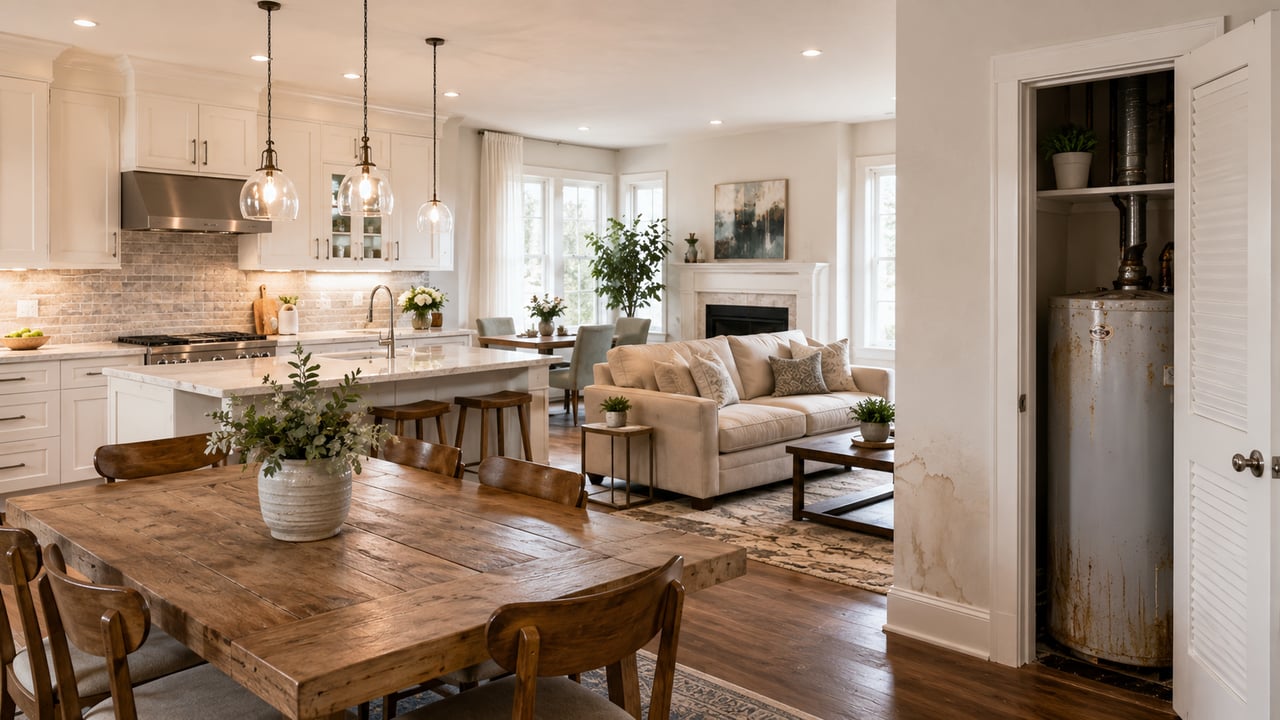
This is the single most common reason a signed deal falls apart in the country. When agents were surveyed on why their deals collapsed, about 70% pointed to the same thing: the home inspection. The pattern is always the same. You accept an offer, everyone is thrilled, and then the inspector finds the aging roof, the tired A/C, the water heater on its last legs, or signs of a foundation or moisture problem. A buyer who is already nervous does not see a to-do list. They see a money pit, and they use their inspection contingency to walk, completely legally.
What to do: This is the highest-return move a seller can make. Get a pre-listing inspection done, and either handle the big-ticket items or price them in and disclose them up front.
1. It's overpriced for the value
The number one reason buyers reject a home, the one sitting underneath almost all the others, is that it doesn't feel like enough house for the money. Buyers do the homework before they ever call me. They pull the comps, they see what actually sold, and they line your home up against the others on their list photo by photo. Right now a lot of them are deciding the answer is no, and they have the leverage to act on it. Almost 45% of home sales now include the seller kicking in concessions, up sharply from a year ago.
What to do: Price where the value honestly is for a buyer who has done their homework. In a market tilted back toward buyers, the seller who prices to today's reality is the one who closes. Get this right and most of the other nine reasons on this list stop mattering.
The takeaway for sellers
Look at the whole list and you'll notice something: almost none of it is about a bad house. It's about how the home is priced, presented, and protected from surprises, and every one of those is in your control. Get them right and you are not fighting this market. You are beating it.
Frequently asked questions
What is the most common reason a home sale falls through? The home inspection. In agent surveys, about 70% of collapsed deals trace back to what the inspector found. A pre-listing inspection, with big-ticket repairs handled or disclosed and priced in, is the most effective way to protect your deal.
How many home purchases are getting canceled right now? Roughly one in six signed contracts is being canceled, the highest rate since tracking began in 2017. In some markets like Tampa it runs closer to one in five.
Why do buyers back out after signing a contract? Three main reasons: cold feet driven by market nerves, a monthly payment that becomes unaffordable once taxes and insurance are added, and inspection findings. Many cancellations also come from contingencies, where the buyer cannot sell their own home in time.
How long are homes taking to sell in Florida? Around eighty-four days on average, up from roughly sixty-eight a year ago. A listing that sits longer than the local average starts to make buyers assume something is wrong, even when nothing is.
How much is homeowners insurance in Florida? The average premium can run around eight thousand dollars a year, and homes in a flood zone need a separate flood policy on top of that. Because premiums are up almost 40% nationally in recent years, buyers now price insurance into the deal before they even tour.
How do I stop my home from sitting on the market? Price it correctly in the first week, when your listing gets its largest burst of attention, and make sure the photos are accurate and professional. Overpricing early and cutting later trains buyers to wait for the next reduction.
📞 561-818-2441 · soldwithjoel.com
📺 More on our Youtube Channel for the latest updates:
Download: Red Flag Homebuyer Checklist